 NEXUS
NEXUS The register, the buy desk and the shelf — one system.
Point of sale, buylist, consignment and inventory in the same application the scanner writes into. Nothing is exported, reconciled or retyped.
One system instead of four that argue.
Point of sale
Ring a sale from the same inventory the shelf and the storefront read. An item sold at the counter stops being for sale everywhere else.
The buy desk
Take a collection over the counter against live catalog data, and record what was paid alongside what came in.
Consignment
Track what you are selling on somebody else's behalf — whose it is, what was agreed, and what is owed when it sells.
Inventory is the argument every shop loses.
Most floors run a register that does not know what is listed online, a spreadsheet that does not know what sold this morning, and a memory of what is out on consignment. The gaps are where margin disappears: the same item priced two ways, a listing that outlived the item, a payout nobody can reconstruct.
- +One inventory. The counter, the shelf and the storefront read the same rows.
- +Billing beside the sale. Invoices and balances sit with the transaction that created them.
- +Fulfillment is not another app. What sold, what is packed, what has shipped.
The counter does not need the machine.
Point of sale, buying, consignment, inventory and billing are software. They work in a shop that has never seen a NEXUS unit. The scanner adds a measured identity and condition record to items that pass through it — it is not what runs your floor.
Buying is where a shop makes its money.
Retail margin is set at the buy, not the sale. A collection that walks through the door is priced against what the market is actually paying, and what you offered is recorded next to what you took in, so the next collection is priced on evidence rather than on how the last one felt.
- +Price against live data. Real market comps surfaced at the counter, while the customer is standing there.
- +Bulk intake. A long box does not become a week of typing.
- +The offer is a record. What you paid, what came in, who brought it, and when.
- +Consignment is tracked, not remembered. Terms, ownership and payout in one place.
We surface the market. We do not set your price.
The counter shows you what comparable items are actually selling for and leaves the number to you. Nobody at NEXUS knows your floor, your customer or what that collection is worth to your business — and a system that pretends otherwise is guessing with your money.
Four tabs, one system.
This is the same left rail the software runs on. Move across it and the panel changes — the way it does on the counter.
Inventory that is one number
Everything you hold, in one place the register, the shelf and the storefront all read from.
- What is in stock, right now
- Costed — what you paid sits with what you hold
- One row, however many places it is listed
The buy desk
Take a collection over the counter against live market data, and keep what you offered next to what came in.
- Priced against real comps, at the counter
- Bulk intake without a week of typing
- The offer becomes part of the record
The person, not the receipt
Who they are, what they collect, and everything they have bought or sold you — one record.
- History, want lists and conversations together
- Segment on what somebody actually collects
- It stays yours when staff move on
What sold, what sat
Reporting on the same rows the counter wrote, not an export that was true last Tuesday.
- Margin by category, not by guess
- What is aging on the shelf
- Per-location, if you run more than one
Hover or tap a tab · this is the client's own sidebar
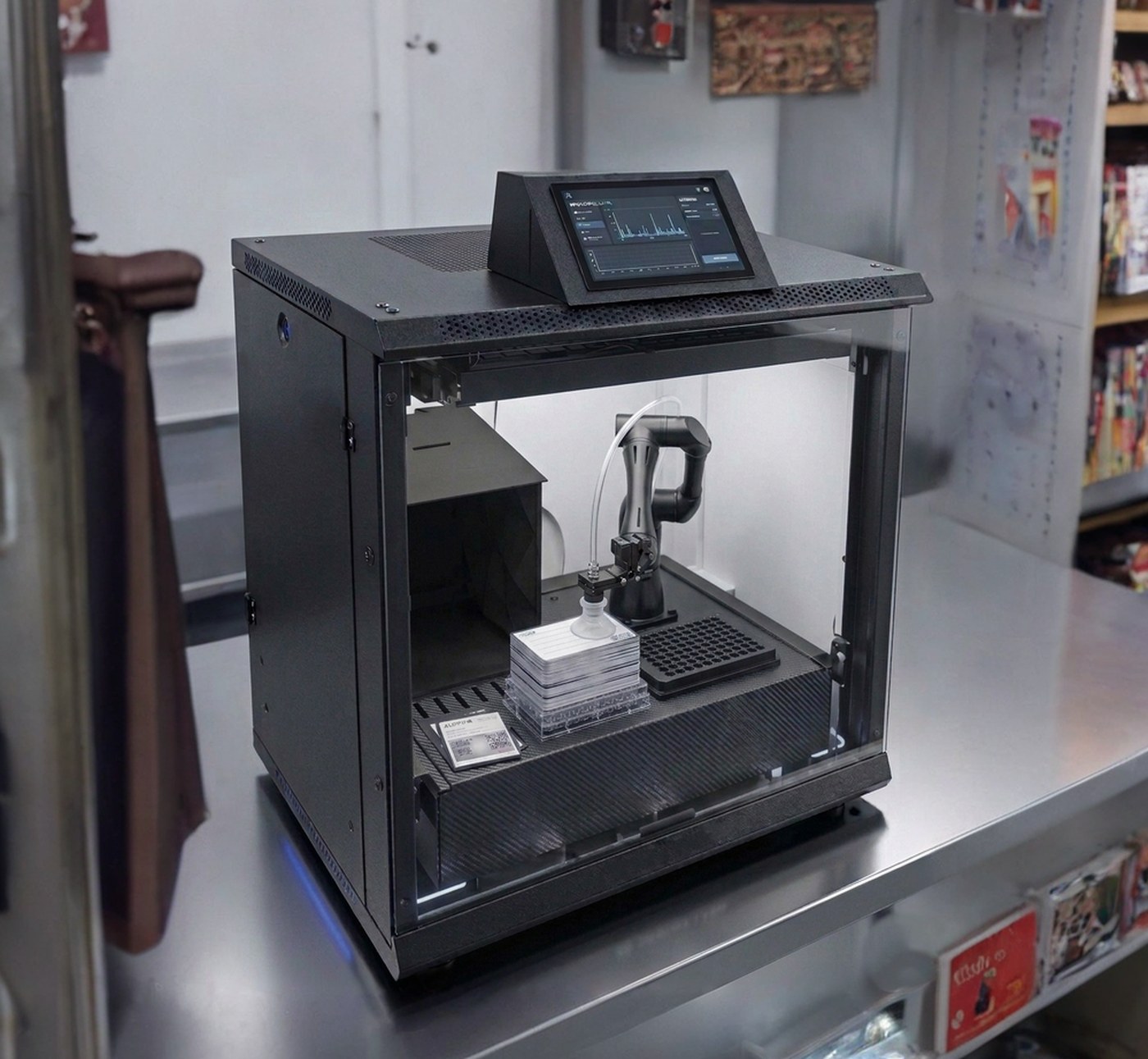
It sits on the counter and it stays there.
One cabinet, one power lead, one network drop — on the same counter the register already runs on.
Let's talk about your floor.
Tell us what moves through your counter and we will walk you through what a unit does with it — throughput, footprint, integration and terms.
Request a deployment briefing