 NEXUS
NEXUS Two stations. One record.
Identity and condition are different measurement problems, so they get different instruments. Nothing is inferred from a single photograph.
Identify
Optical capture resolves the item against a catalog of known types held locally on the machine. No round trip, and no dependency on a third-party service being up.
Measure
Controlled lighting and fixed geometry produce dimensional and surface measurements that repeat — the same item, on any unit, on any day.
Record
Measurements, capture telemetry and a visual fingerprint are written to a provenance record keyed to that individual object.
Carry
The record persists across owners and platforms. A later scan can be checked against the original — the same object, or not.
One instrument cannot do both jobs.
- +Identity is a lookup — it asks which catalog row this is, and it wants speed.
- +Condition is a measurement — it asks what state this individual object is in, and it wants precision with no clock on it.
- +Being wrong about identity is recoverable: it routes to review and an operator confirms. Being wrong about condition is not. The two get different treatment because the cost of error is different.
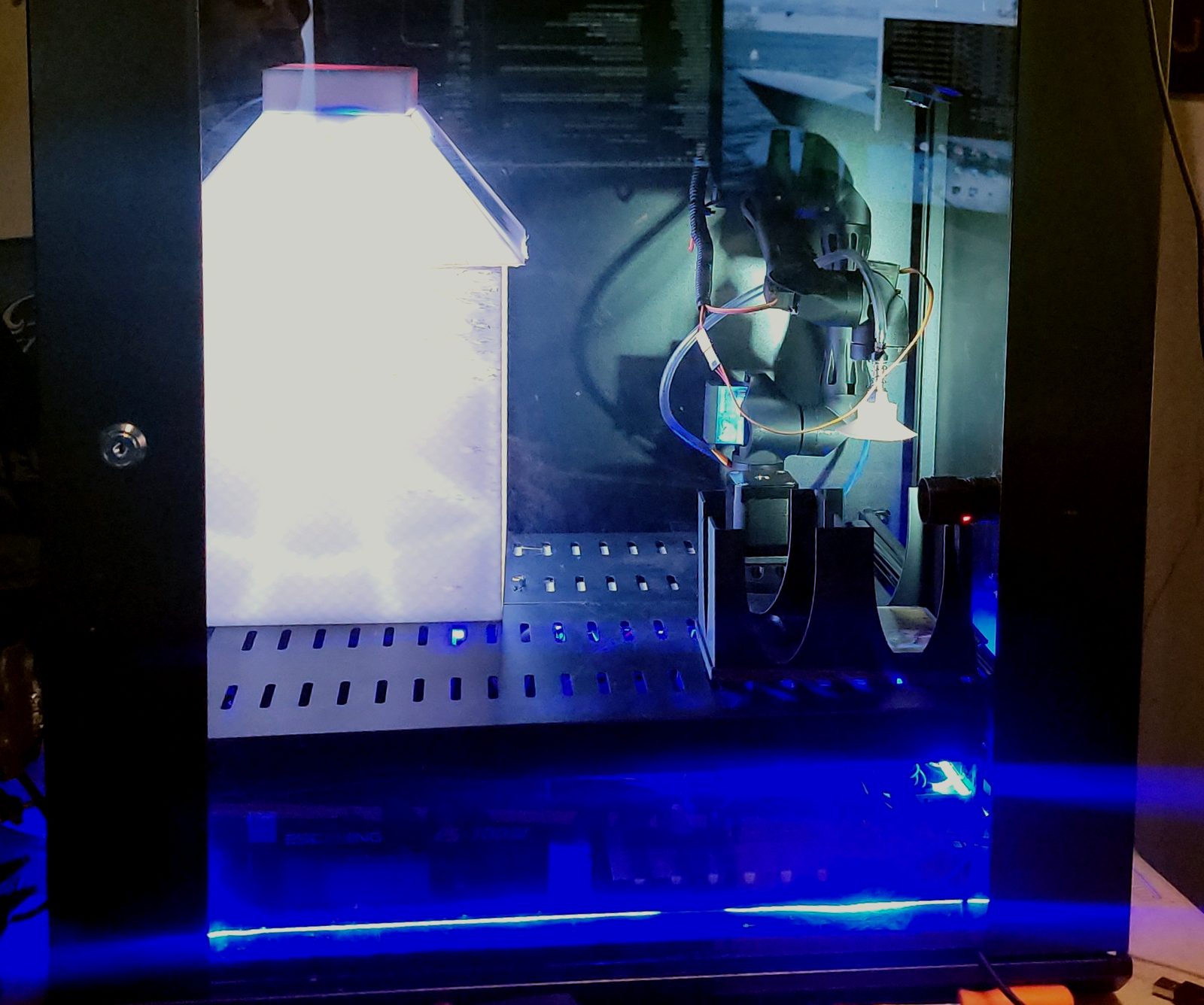
The card is handled once.
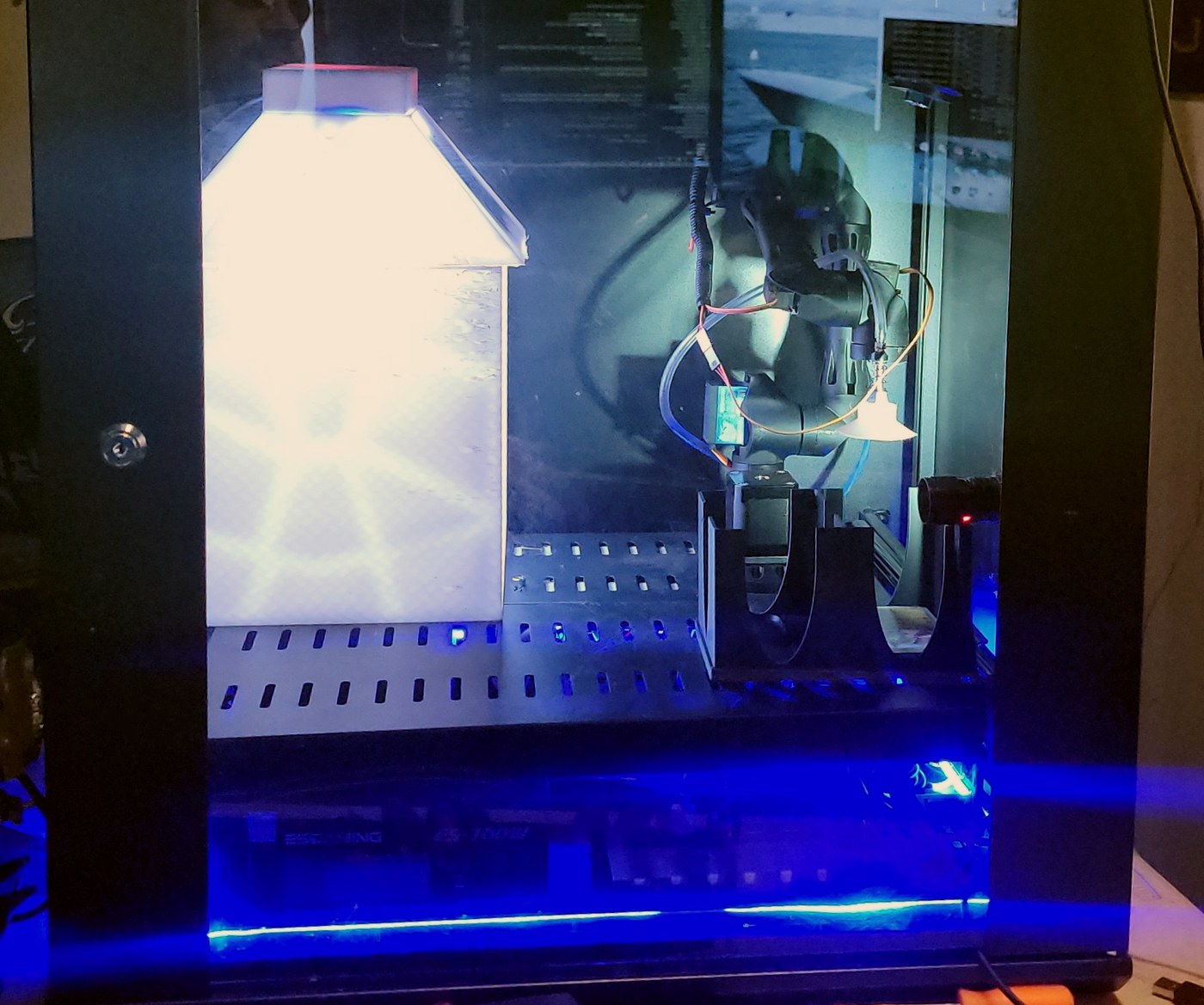
A vacuum pickup lifts a single card off the stack, presents it to the capture volume, and sets it down in the sorted tray. No operator handling between intake and record, so the item that was measured is the item that was logged.
Every copy carries a signature no two share.
The surface of a manufactured object — the grain, the edges, the micro-variation of how it was made — is different on every individual copy, even two off the same line. That difference is an optical fingerprint of that one object, and it is already there. Nothing is added: no chip, no tag, no sticker.
Read it the same way, every time
Fixed geometry and controlled light, so the same object presents the same way on any unit, on any day. Consistency is what makes the rest possible.
Reduce it to a signature
From the image the system derives a compact signature of that individual object — its optical biometric, specific to the copy and not the type.
Prove it is itself, later
A later scan, anywhere, compares the object in front of it against the signature and answers one question: the same object, or not.
The recognition runs on the machine — optical character reading, perceptual hashing and a deterministic match, with an AI review queue for anything the deterministic stack cannot resolve on its own. The measurement layer never guesses: when it is not certain, it says so, and a person decides.
The catalog lives where the scan happens.
Let's talk about your floor.
Tell us what moves through your counter and we will walk you through what a unit does with it — throughput, footprint, integration and terms.
Request a deployment briefing I'm interested in a scanner