 NEXUS
NEXUS Your best customer is the one you already have.
Contacts, conversations, pipeline, campaigns and reputation — attached to the purchase history that makes them worth reaching.
Selling to the room you already own.
Customer records
Who they are, what they collect, what they have bought and what they have sold you. One record instead of a name on a receipt.
Pipeline
The deal that has not closed yet: a collection somebody is thinking about selling, a want list somebody is waiting on.
Conversations
The thread with that customer, in the same place as their history, so whoever picks it up is not starting cold.
Campaigns that know what is on the shelf.
A campaign built on live inventory and real purchase history beats a blast to everyone. The people who buy vintage basketball are a list you already have — they just are not written down anywhere yet.
- +Campaigns. Segment on what somebody actually collects.
- +Social. Post the case you just filled without leaving the counter.
- +Automation. The follow-up that happens whether or not anyone remembered.
- +Forms. Want lists and intake, straight into the pipeline.
- +Reputation. Reviews tracked next to the sale that earned them.
We do not write your marketing for you.
These are tools that put your own customer data where you can act on it. What you say to your customers is still yours to say, and the shops that do it well are the ones that already know their room.
Most shops rent their customer list.
If the relationship lives on a marketplace, a social platform or a phone in somebody pocket, it is not yours. The platform can change its rules, the employee can leave, and the list leaves with them. A customer record that sits in your own system beside your own sales history is an asset you keep.
- +It is your data. Exportable, backed up, and not held hostage to a channel.
- +History travels with the person. Bought, sold, asked about, waiting on.
- +Staff turnover stops costing relationships. The context is in the record, not in a head.
A measured record is a reason to come back.
For shops running a NEXUS unit, the identity and condition record produced at intake attaches to the customer who brought the item in. The person who consigned an item can be shown exactly what was measured, and a buyer downstream is reading evidence instead of a description. That is a customer-facing use of the machine, not a back-office one.
Shops without a unit still get everything on this page. The record is an addition to the relationship, never the thing the relationship depends on.
What you take with you if you go.
Every shop owner has been locked into something. The way that happens is rarely a contract — it is that the data becomes impossible to get out in a usable shape, so switching means retyping years of customers and sales, and nobody has the week.
Your customers, your sales history and your inventory are yours in a form you can actually use somewhere else. We would rather earn the renewal than hold the exit.
- +Exportable, not hostage. Customers, inventory and sales, in standard formats.
- +The provenance record is portable by design. It outlives the platform it was written on — including ours.
- +No ransom on your own history. Leaving costs you a decision, not your records.
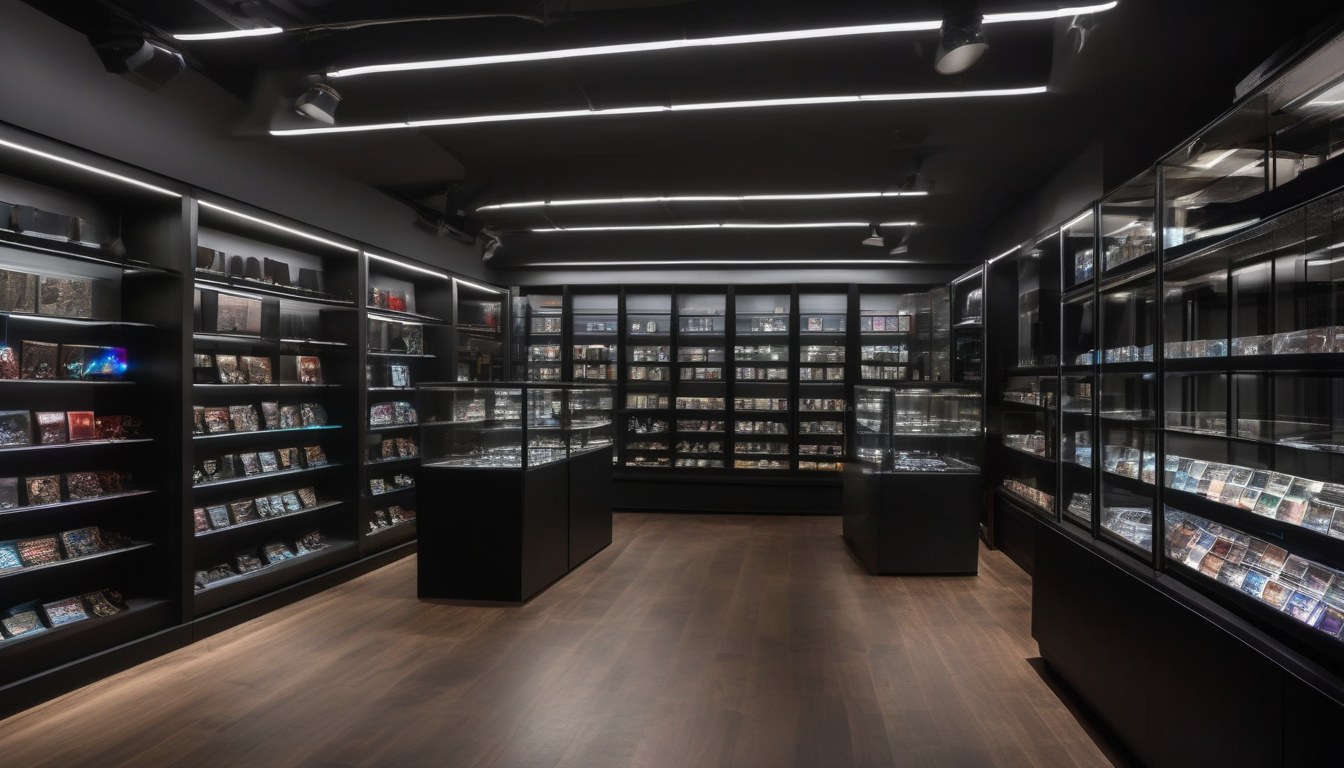
Built for a room like this one.
Point of sale, buying, consignment and inventory in one application — on a floor that has never seen a NEXUS unit, or one that has.
Let's talk about your floor.
Tell us what moves through your counter and we will walk you through what a unit does with it — throughput, footprint, integration and terms.
Request a deployment briefing Try the live demo Download the CRM